Obrazy Miejscowości w Prasie Lwowskiej 1811–1939
Images of Localities in the Lviv Press – a Polish-language book series
Małe ojczyzny widziane oczami dawnych gazet. Seria książek, które
zbierają, porządkują i opatrują komentarzem prasowe wzmianki o galicyjskich miasteczkach.
Small homelands seen through the eyes of old newspapers – a book series that
gathers, orders and annotates the press mentions of the towns of old Galicia.
Każdy tom poświęcony jest jednej miejscowości. Autorzy brną przez dekady roczników
dawnej prasy lwowskiej – od pierwszych doniesień z początku XIX wieku po ostatnie przedwojenne
notatki – i z setek tysięcy przejrzanych stron zbierają ogrom cytatów. Uporządkowane i opatrzone
komentarzem, który przywraca im historyczny kontekst, składają się na portret miasteczka:
jego ludzi, spraw i codzienności.
Each volume is devoted to a single town. The authors wade through decades of the old
Lviv press – from the earliest reports of the early 19th century to the last pre-war notes – and from
hundreds of thousands of pages they gather a vast trove of quotations. Ordered and annotated to restore
their historical context, these build up a portrait of the town: its people, affairs and everyday life.
Simulacrum
Zapowiedź · w przygotowaniuAnnounced · in preparation
Simulacrum to kopia bez oryginału – obraz powielany tak długo, aż zajmuje
miejsce osoby, którą miał przedstawiać. Taki wizerunek żydowskiego sąsiada przez lata utrwalała dawna
prasa lwowska – podobiznę, która wyparła człowieka i zastąpiła go sloganami. A w samym
słowie – niemal przypadkiem – kryje się sacrum. Nie chodzi o świętość, lecz o to, co
w człowieku nietykalne.
A simulacrum is a copy without an original – an image reproduced so long that
it takes the place of the person it was meant to depict. For years the old Lviv press fixed just such
an image of the Jewish neighbour – a likeness that supplanted the human being and replaced him with
slogans. And within the word itself, almost by accident, hides a sacrum. Not holiness, but
what is inviolable in a person.
Antologia materiałów z prasy lwowskiej dotyczących Żydów. Seria zbiera różne
obrazy, by je oddać czytelniczej analizie po 150 latach. Surowy język źródeł
przytaczamy w brzmieniu epoki i zawsze jako świadectwo.
An anthology of material from the Lviv press concerning Jews. The series gathers these
varied images in order to open them to the reader’s analysis, 150 years
on. The raw
language of the sources is quoted in the wording of its era, and always as testimony.
Uliczny palimpsest
Zapowiedź · w przygotowaniuAnnounced · in preparation
Palimpsest to pergamin, z którego zeskrobano stary tekst, żeby zapisać nowy.
Stary jednak nie daje się usunąć do końca – prześwituje spod spodu. Z ulicą jest podobnie.
Styropian i pstrokaty tynk kładą się na cegle, szyld zasłania szyld, a dawny zapis trwa
pod spodem i czeka na czytelnika.
A palimpsest is a parchment scraped clean of its old text to make room for a new one.
Yet the old never quite vanishes – it shows through from beneath. It is much the same with the street.
Styrofoam and gaudy render settle over brick, one signboard hides another, and the old inscription
lingers underneath, waiting for its reader.
Seria albumów o architekturze i ulicy. Fotografujemy to, co przetrwało pod
kolejnymi warstwami – czasem po to, żeby zdążyć przed zamazaniem, czasem dlatego, że stare właśnie
odzyskuje dawną rangę. Ocalamy od zapomnienia zapis, który jutro może być już nieczytelny.
A series of albums on architecture and the street. We photograph what has survived
beneath the successive layers – sometimes to be in time before it is painted over, sometimes because
the old is just now regaining its former standing. We save from oblivion a record that tomorrow may
already be illegible.
Apokryf Galicyjski
Zapowiedź · w przygotowaniuAnnounced · in preparation
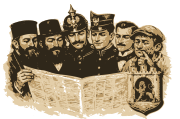
Dawna prasa, dokumenty i wspomnienia rysują nieraz zupełnie inny obraz miejsc
i wydarzeń niż ten, który utrwalił się w powszechnej pamięci. Jedne wersje zostały zapomniane
celowo, inne po prostu zaginęły w mrokach dziejów.
Old newspapers, documents and memoirs often paint a completely different picture of
places and events than the one fixed in common memory. Some versions were forgotten on purpose;
others simply got lost in the mists of history.
Seria sięga po te właśnie opowieści i oddaje je czytelnikowi w formie komiksu,
opowiedzianego ustami bohaterów, których stwarzamy na nowo. A komiks jest medium, które jak żadne
inne pozwala zobaczyć tamten świat na własne oczy – ulice, wnętrza i twarze, których nie uchwycił
żaden fotograf.
The series reaches for precisely such stories and offers them to the reader as a comic,
told through the voices of characters we bring to life anew. And the comic is a medium that – like no
other – lets you see that world with your own eyes: the streets, the interiors and the faces that no
photographer ever captured.
Dołęga-Mostowicz ilustrowany
Zapowiedź · w przygotowaniuAnnounced · in preparation
Bibliofilskie wydania ilustrowane.
Illustrated bibliophile editions.
Powieści Tadeusza Dołęgi-Mostowicza szły najpierw w odcinkach
w warszawskich dziennikach, a stamtąd trafiały do księgarń i na ekran:
Kariera Nikodema Dyzmy, Znachor, Profesor Wilczur. Wydajemy je
z ilustracjami: szesnaście powieści w jednej szacie, twarda oprawa, mapa miejsc akcji
na wyklejce, malowana okładka.
Tadeusz Dołęga-Mostowicz’s novels ran first as serials in the Warsaw dailies,
and from there reached the bookshops and the screen: Kariera Nikodema Dyzmy,
Znachor, Profesor Wilczur. We are publishing them
illustrated: sixteen novels in one design, hardback binding, a map of the places in the story on
the endpaper, a painted cover.